
Cruise Port: Lisbon, Portugal
Get ready to fall in love with Lisbon! Here's your guide to an unforgettable cruise port day, filled with culture, flavour, and breathtaking views.
Journey Through the Pages
Know BEFORE YOU GO
cruise port locations
It's important to note that Lisbon utilises three different cruise terminals/quays. For precise details on where your ship will dock, please refer to your cruise line's website or contact them directly. The terminals are outlined below.
Lisbon Cruise Terminal (Terminal de Cruzeiros de Lisboa)
Opened in 2017, this is Lisbon's newest, most modern, and most frequently used cruise facility. Strategically located close to the historic city center, it consolidates what were previously known as the Jardim do Tabaco (JTAB) and Santa Apolónia (TPSA / TPSAJ) berths. Designed with contemporary cruise ships in mind, it boasts the capacity to handle larger vessels and features state-of-the-art amenities. Passengers can expect efficient disembarkation processes, spacious waiting areas, a tourist information desk, duty-free shops, and cafes. Its prime location means you're typically a short walk or quick metro ride (Santa Apolónia station is adjacent) from major attractions like the Alfama district, Lisbon Cathedral, and Praça do Comércio, putting you right at the heart of the city's vibrant atmosphere.
Alcântara Cruise Terminal (Gare Marítima de Alcântara)
Situated a bit further west from the core city centre, under the iconic 25 de Abril Bridge, Alcântara still serves as an important hub for cruise traffic, particularly for mid-sized ships or when the main terminal is occupied. While not as new as the Lisbon Cruise Terminal, it offers functional facilities. Its location provides excellent transport links: tram lines (including the famous Tram 15E to Belém), bus routes, and a train station (Alcântara-Mar) are all conveniently nearby, connecting passengers quickly to both the city center and the popular Belém district with its Jerónimos Monastery, Belém Tower, and Padrão dos Descobrimentos (Monument to the Discoveries). The area itself has a trendy, industrial-chic vibe, with the LX Factory creative hub just a short distance away.
Rocha Conde de Óbidos (TPR)
This terminal is primarily a multi-purpose port facility that occasionally hosts cruise ships, especially during Lisbon's busy peak cruise seasons or when the other terminals are at full capacity. Located adjacent to Alcântara, it shares a similar geographical positioning further west along the Tagus River. While its facilities may be more basic compared to the Lisbon Cruise Terminal, it remains a functional point of embarkation and disembarkation. Like Alcântara, it benefits from relatively good access to public transport (trams, buses, and train stations), enabling passengers to connect efficiently to the city's main attractions, albeit usually requiring a short journey rather than a direct walk.
Pre-Arrival Planning
- Prioritise Your Must-Sees: Lisbon has a wealth of attractions. Decide what's most important to you: historical sites, scenic views, food experiences, or a combination.
- Consider Transportation Options
- Walking: Lisbon's city centre is walkable, but the city is hilly.
- Trams: The iconic Tram 28 is a popular choice, but can get very crowded.
- Metro: Lisbon's metro system is efficient and easy to use.
- Hop-on Hop-off Buses: A convenient way to see major attractions.
- Taxis/Ride-Sharing (Grab/Uber): Useful for getting to specific locations quickly.
- Transportation tickets: Consider purchasing a 24-hour public transportation pass for unlimited travel
helpful considerations
- Start Early: Maximise your time by disembarking as early as possible.
- Wear Comfortable Shoes: You'll be doing a lot of walking on cobblestone streets.
- Stay Hydrated: Especially during the warmer months.
- Be Aware of Crowds: Popular attractions can get very crowded, especially when multiple cruise ships are in port.
- Manage Your Time: Keep an eye on the time to ensure you return to your ship before departure.
- Local Currency: While credit cards are widely accepted, having some euros on hand is useful.
- Try Local Cuisine
- Don't miss the famous "Pastéis de Belém" (custard tarts).
- Enjoy fresh seafood at a local restaurant.
- Be Mindful of Your Belongings: Like any major city, Lisbon has its share of pickpockets. Keep your valuables secure.
- Consider a Guided Tour: If you prefer a structured experience, consider a shore excursion or a private tour.
- Enjoy the Views: Lisbon is known for its stunning viewpoints. Take time to enjoy the panoramic vistas.
Lisbon Neighbourhoods
alfama District
The Alfama district is Lisbon's oldest and most atmospheric neighbourhood, located on a slope between São Jorge Castle and the Tagus River. Its name comes from the Arabic word al-hamma, meaning "hot springs." This labyrinthine area is one of the few parts of Lisbon that survived the devastating 1755 earthquake, and as a result, it has retained its medieval layout of narrow, winding streets, alleys, and small squares.
Alfama DISTRICT: Key features
- Fado Music: Alfama is considered the birthplace of Fado, a melancholic and soulful Portuguese music genre. The mournful melodies of Fado can be heard echoing from the district's many small bars and restaurants. The Fado Museum is located here, offering a deeper dive into the history and cultural significance of this UNESCO-listed tradition. Photo two below (middle) shows some street art dedicated to the Fado Music.
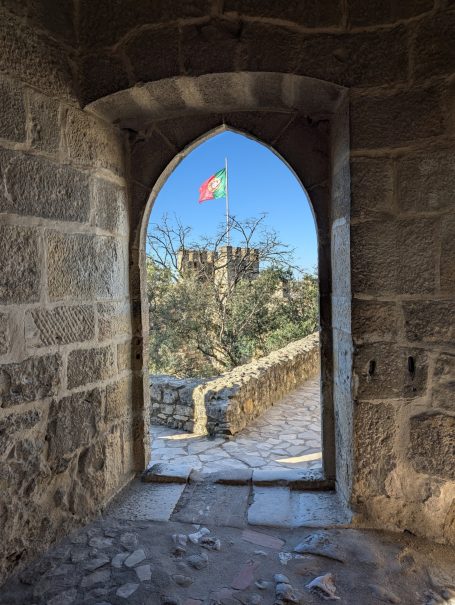
- São Jorge Castle: Perched on the highest hill, this medieval castle offers some of the most breathtaking panoramic views of Lisbon. Photo one below (left) is a view of the castle walls through a stone archway located on the castle grounds.
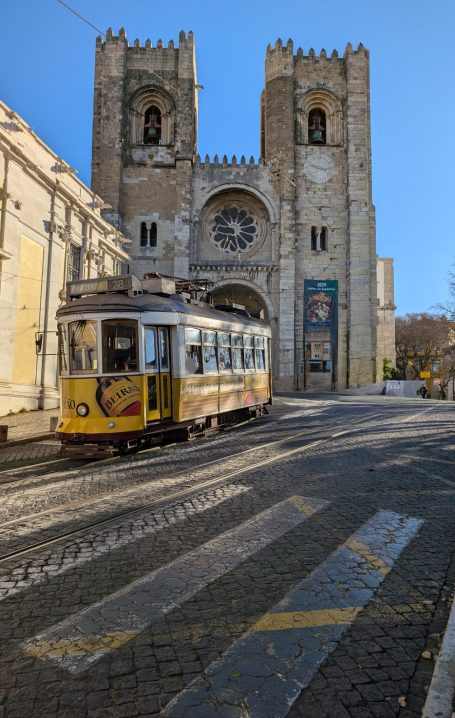
- Lisbon Cathedral (Sé de Lisboa): The city's oldest church, dating back to 1147, showcases a mix of Romanesque, Gothic, and Baroque architecture. Photo three (right) at the top of the page with the iconic yellow trams travelling past the cathedral.
- National Pantheon: A grand building with a dome that houses the tombs of some of Portugal's most important historical figures.
- Views and Vistas: Alfama is famous for its "miradouros" (viewpoints), such as Miradouro de Santa Luzia and Miradouro das Portas do Sol, which offer stunning views of the red-tiled rooftops cascading down to the Tagus River. Photo three (below) is a sunset view of the city from Miradouro de Santa Luzia.
- Transport: The steep and narrow streets make walking a popular way to explore, but the iconic yellow Tram 28 provides a charming and scenic ride through the heart of the district, connecting many of its main attractions.
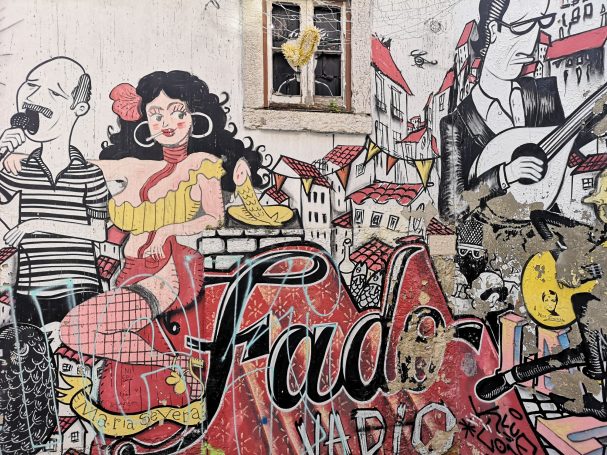
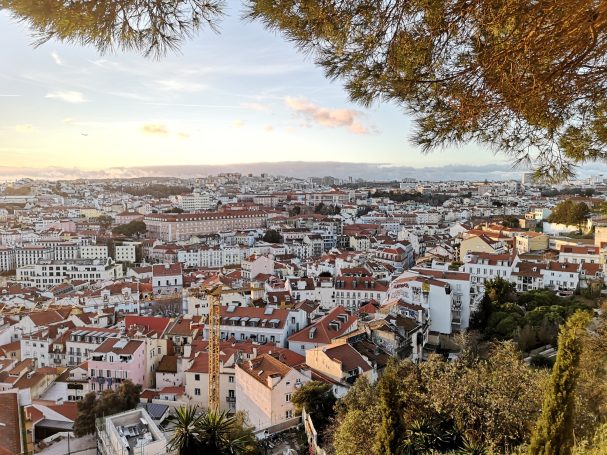
Baixa District
The Baixa district, also known as Baixa Pombalina, is the historic and commercial heart of Lisbon. The area's elegant and innovative design is a direct result of the catastrophic 1755 earthquake, tsunami, and fire that destroyed much of the city. Under the leadership of the Marquis of Pombal, the district was rebuilt with a revolutionary grid pattern and pioneering earthquake-resistant construction techniques, making it one of the first examples of such urban planning in Europe.
Baixa DISTRICT: Key features
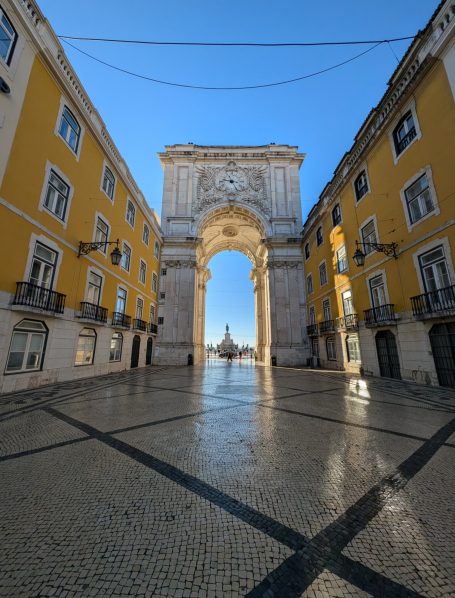
- Praça do Comércio: This grand riverside square, once the site of the royal palace, served as the "gateway to Lisbon" for arriving ships. It is surrounded by majestic yellow buildings and features a statue of King José I on horseback. At the north end of the square, the Rua Augusta Arch provides a grand entrance to the city's main shopping street and offers panoramic views from its viewpoint. Photo two below (middle) shows a close up of the Rua Augusta Arch. Another view of this arch can be seen in photo one (left) at the top of the page.
- Rossio Square (Praça Dom Pedro IV): Located at the heart of the district, this lively square is a hub for both locals and tourists. It's known for its iconic wave-patterned mosaic pavement and is home to the Dona Maria II National Theatre.
- Rua Augusta: This elegant, pedestrianised street is the main artery of the Baixa, bustling with shops, street performers, and cafes. Many of the parallel streets are named after the trades that once thrived there, such as Rua do Ouro (Gold Street) and Rua da Prata (Silver Street).
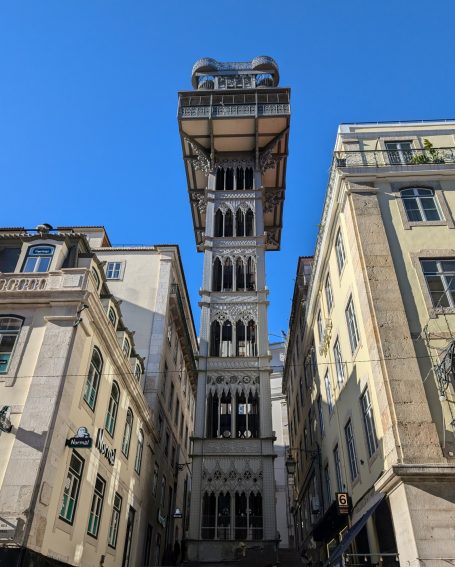
- Santa Justa Lift: An eccentric, wrought-iron elevator built in the neo-Gothic style, this lift connects the lower Baixa district to the hillside neighbourhood of Bairro Alto, providing an efficient shortcut and a viewing platform with stunning city vistas. Photo one & three below (left & right) show the views from the vantage point and the exterior from the street of the lift. Tip: Do not pay for this experience, unless you want to try the lift itself, if you are able, there is a free way to access the views from the top of this vantage point. The easiest way to access this is to walk past the lift, until you reach Rua do Carmo. Once you reach this street, walk left until you see a blue sign that outlines a key, baggage and reads 'left luggage'. If you follow the path (via the stairs) through this passageway, you will reach the outside of the Carmo Convent and the viewpoint that is accessible from the lift.
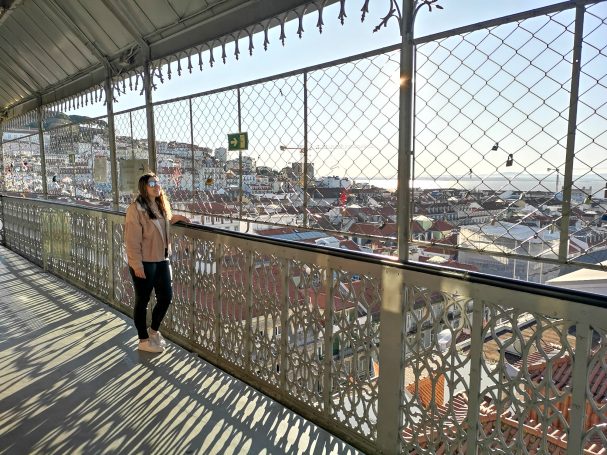
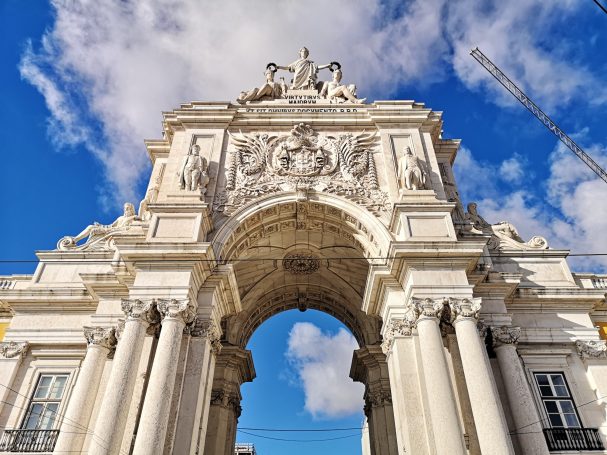
chiado district
Chiado is a vibrant and sophisticated neighbourhood in Lisbon that has long been a hub for the city's intellectual and artistic elite. Perched on a hill above the Baixa district, it's a place where history, culture, and high-end commerce intersect.
Chiado district: key features
- Café A Brasileira: A famous historic cafe known for its association with the poet Fernando Pessoa, whose bronze statue is located outside.
- Rua Garrett: The main street for shopping, filled with high-end boutiques and historic shops, including the world's oldest bookstore, Livraria Bertrand.
- Theatres: The district is a cultural hub with theatres like the Teatro Nacional de São Carlos and the Trindade Theatre.
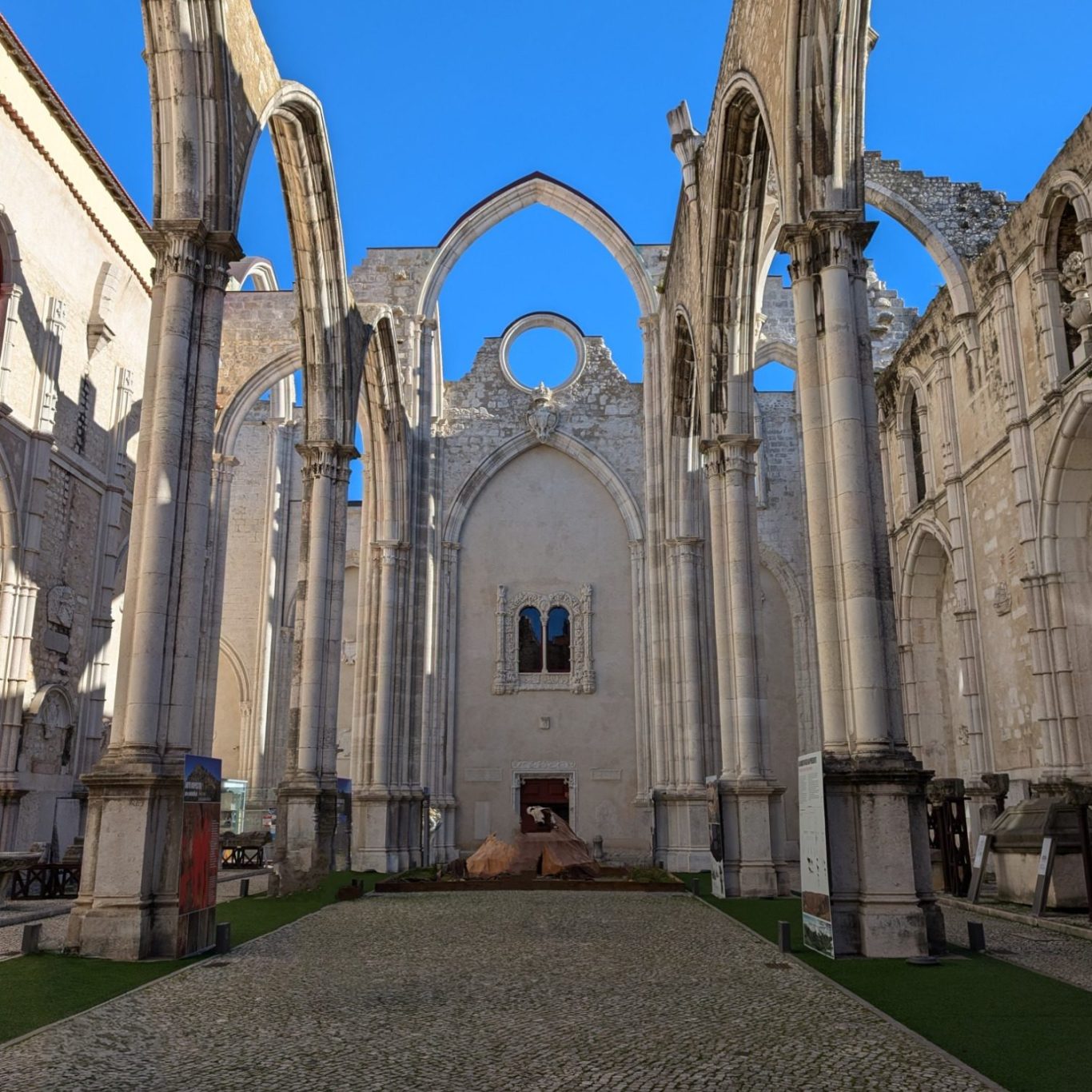
- Carmo Convent: The ruins of a Gothic church that serves as a memorial to the 1755 earthquake. Photo below shows a view of the Convent from inside the grounds.
- Museums: Home to the National Museum of Contemporary Art (Museu do Chiado), which features a significant collection of Portuguese art.
- Squares: Chiado Square and Praça Luís de Camões are central gathering places featuring statues of prominent poets.
Bairro Alto District
Bairro Alto is a historic, bohemian district in Lisbon. By day, it's a quiet residential area with narrow, cobbled streets, filled with traditional houses, small shops, and art galleries. You might see locals hanging laundry from their balconies.
As the sun sets, the neighbourhood transforms. It's famous for its vibrant nightlife, with hundreds of bars and restaurants lining its streets. The area becomes a giant open-air party as crowds of people spill out of the small bars and socialise in the streets. Bairro Alto is also known for its fado houses, where you can experience live performances of this traditional Portuguese music.
Bairro Alto District: Key Features
- Viewpoints: Miradouro de São Pedro de Alcântara, which offers a panoramic view of the city and is a great spot for sunset.
- Churches: São Roque Church, known for its opulent baroque interior.
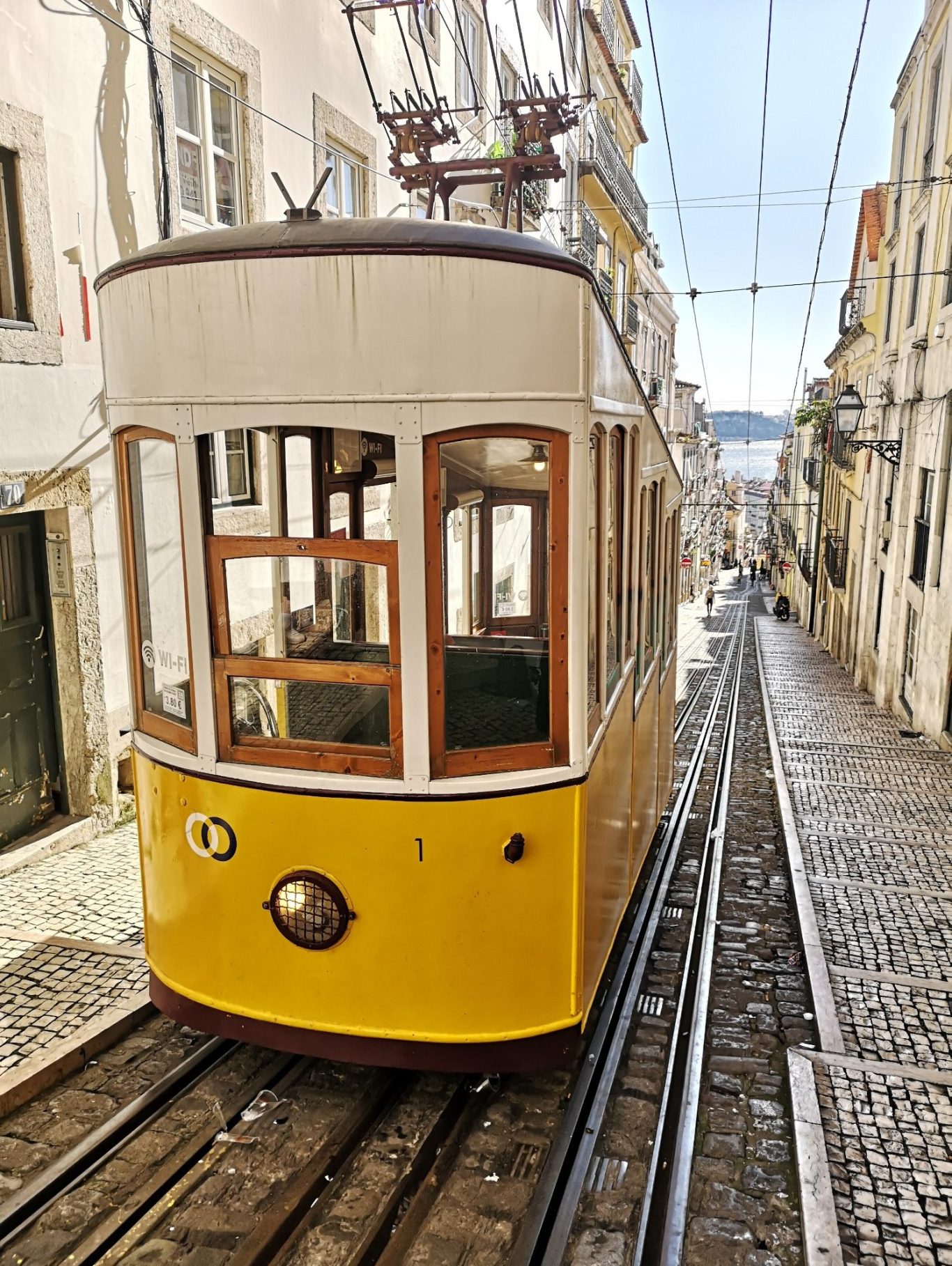
- Funiculars: The Elevador da Bica and the Glória Funicular are historical landmarks and offer a unique way to navigate the hilly streets. Photo below shows a view of the Elevador da Bica iconic yellow cart located on Rua da Bica de Duarte Belo.
- Fado Houses: The district is home to many traditional fado houses where you can experience live fado music.
BelEm District
Belém is a historic riverside district in Lisbon, best known for its connection to Portugal's Age of Discoveries. It served as the port from which many explorers, including Vasco da Gama, began their epic sea voyages. Today, it is a popular tourist destination, home to several UNESCO World Heritage sites and the iconic custard tarts known as Pastéis de Belém.
BelEm District: Key Features
- Maritime History: It was the departure point for many famous explorers, including Vasco da Gama, who set sail from here on his voyage to India. The area's proximity to the Tagus River made it a crucial seaport.
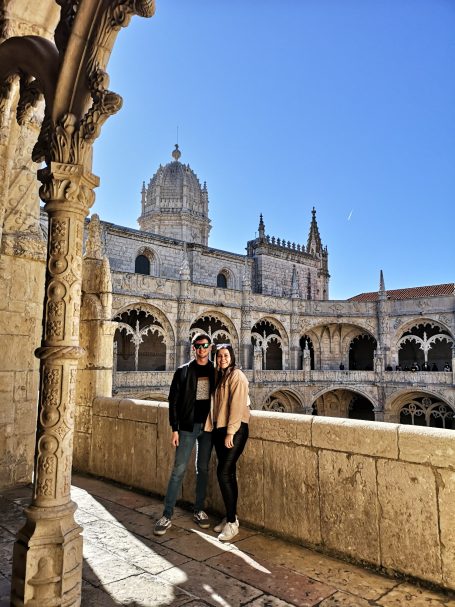
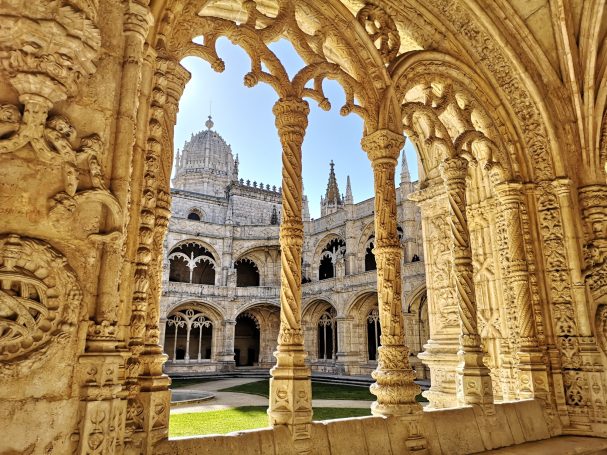
- Jerónimos Monastery: This UNESCO World Heritage site is a masterpiece of Manueline architecture, a richly ornate Portuguese Gothic style. It was built to honor Vasco da Gama and serves as his final resting place.
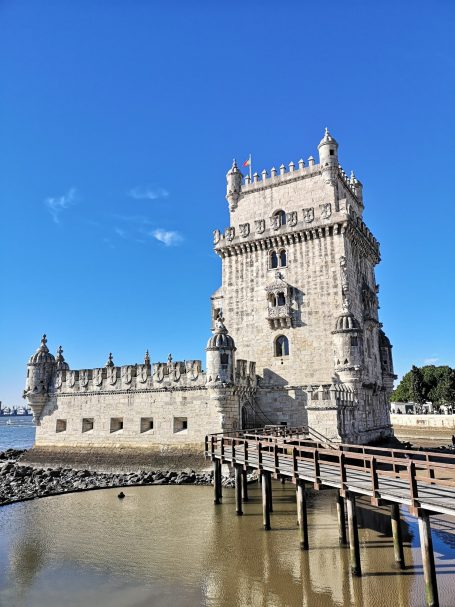
- Belém Tower: Another UNESCO site, this 16th-century fortress and ceremonial gateway to the city is a symbol of Portugal's maritime power. It features the same intricate Manueline style as the monastery.
- Monument of the Discoveries (Padrão dos Descobrimentos): Erected in 1960, this striking monument is shaped like a ship's prow and pays tribute to the key figures of the Age of Discoveries, including Prince Henry the Navigator.
- Pastéis de Belém: The original and most famous Portuguese custard tarts, known as pastéis de nata, originated with the monks at the Jerónimos Monastery. You can buy them at the historic bakery, which has been making them since 1837 using a secret recipe.
- Other Attractions: The district is also home to the Belém Palace, which is the official residence of the Portuguese President, and several museums including the National Coach Museum and the Maritime Museum.
cais do sodre dISTRICT
Cais do Sodré has a fascinating history of transformation. Once a port known for its rougher side and being the red-light district, it has been completely revitalised into one of Lisbon's most vibrant and fashionable neighbourhoods.
cais do sodre dISTRICT: kEY fEATURES
- A New Lease on Life: Originally a hub for sailors and dockworkers, the area was known as a red-light district with a reputation for being seedy. However, a major urban regeneration project has completely changed its character, attracting a younger, more creative crowd.
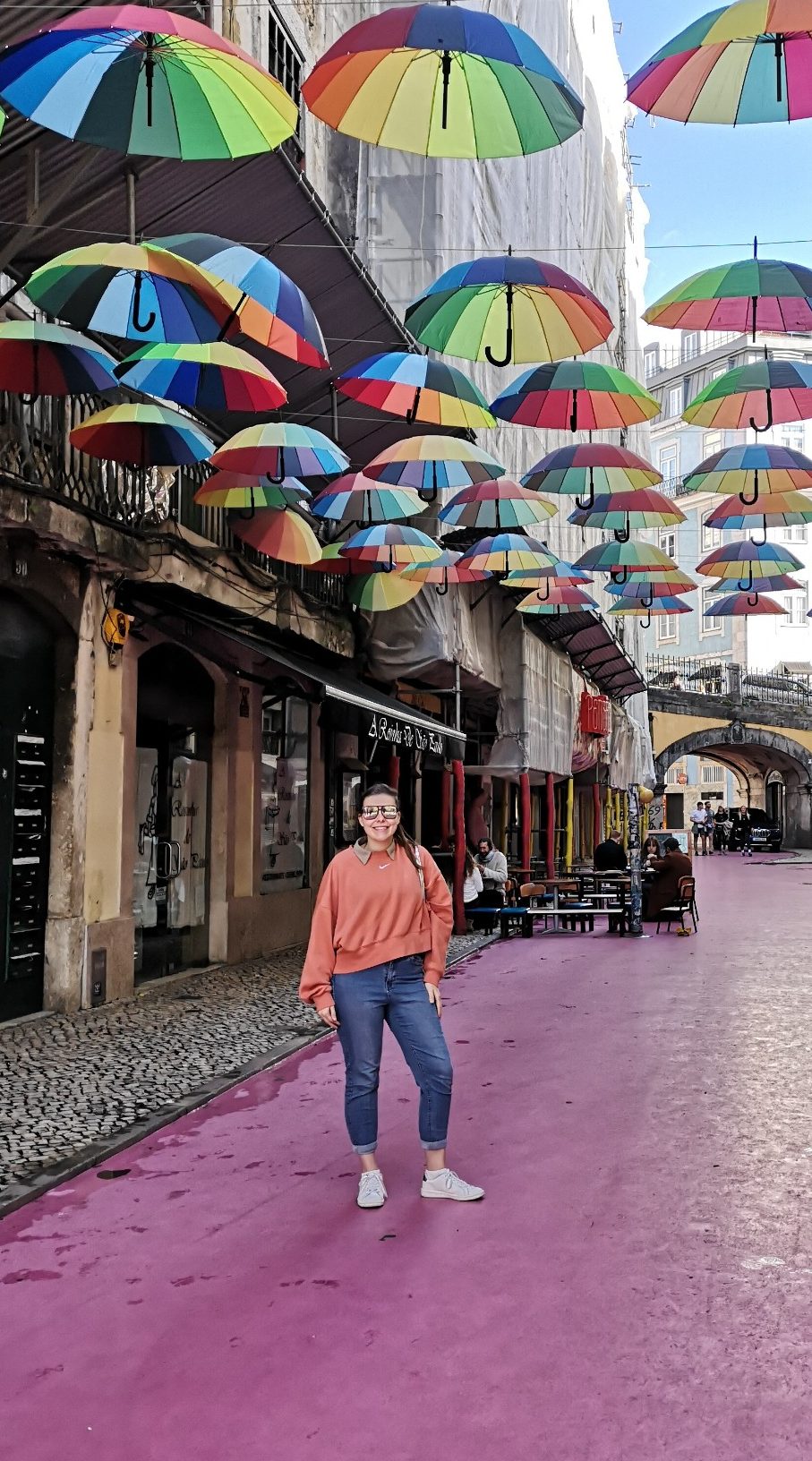
- The Famous Pink Street: The centrepiece of this transformation is Rua Nova do Carvalho, popularly known as "Pink Street." The bright pink pavement, a result of the city's revitalisation efforts, has become an iconic photo spot. Photo below is me posing on "Pink Street" in Lisbon.
- Nightlife Hub: Pink Street and the surrounding area are now the heart of Lisbon's nightlife, with a high concentration of bars and clubs that stay open late.
- Time Out Market: Housed in the historic Mercado da Ribeira, the Time Out Market is a huge food hall that has become a major culinary destination. It features stalls from some of Lisbon's best-known chefs and restaurants, offering a diverse range of high-quality Portuguese food and drink.
- Beyond the Nightlife: By day, Cais do Sodré retains its distinctive character. It's a key transport hub with a major train station, and the revitalised waterfront promenade, Ribeira das Naus, offers a great place to relax and enjoy views of the Tagus River.
Last Updated: 19 August '25