travel tips: Prague castle, czech republic
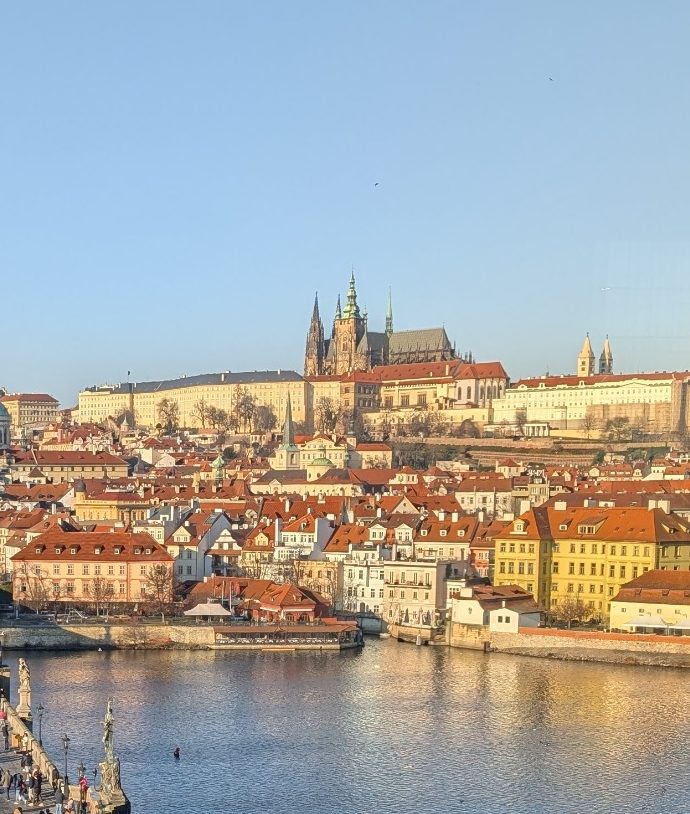
Perched high above the Vltava River, Prague Castle is not just a fortress—it is a sprawling symbol of Czech history and the largest ancient castle complex in the world. For over a millennium, this UNESCO World Heritage site has served as the seat of power for Bohemian kings, Holy Roman emperors, and modern-day presidents.
Whether you are drawn by the soaring Gothic spires of St. Vitus Cathedral, the colourful tiny houses of Golden Lane, or the panoramic views over the city’s red-tiled roofs, the castle is an essential stop for every traveller.
Journey Through the Pages
history of Prague Castle
Founded around 880 AD by Prince Bořivoj, Prague Castle began as a simple wooden fortress that evolved over a millennium into the world’s largest ancient castle complex. Its "Golden Age" arrived in the 14th century under Emperor Charles IV, who transformed it into a magnificent Gothic imperial residence and began the nearly 600-year construction of the iconic St. Vitus Cathedral.
Throughout the centuries, the castle was a central stage for European power struggles and religious conflict, most famously serving as the site of the 1618 Defenestration of Prague, which sparked the Thirty Years' War. While the Habsburgs later gave the exterior a unified, Neoclassical appearance, the castle transitioned from a royal palace to a national symbol with the founding of Czechoslovakia in 1918.
Today, Prague Castle remains the heart of the nation as the official office of the Czech President. Having survived empires, wars, and the fall of Communism, it stands as a living museum where every architectural style of the last thousand years is etched into its stone walls.
admission prices
Main Circuit
This circuit covers the Cathedral, the Old Royal Palace, St. George's Basilica, and the Golden Lane.
- Adults: 450 CZK
- Reduced (Children 6–16, students up to 26, and seniors 65+): 300 CZK
- Family (Up to 5 children under 16 + max. 2 adults): 950 CZK
Great south tower
If you wish to climb the Great South Tower for panoramic views, a separate admission is required.
- Adults: 200 CZK
- Reduced (Children 6–16, students up to 26, and seniors 65+): 150 CZK
- Family (Up to 5 children under 16 + max. 2 adults) 500 CZK
landmarks of Prague Castle
Stepping through the gates of Prague Castle is like entering a self-contained city where time has stood still for over a millennium. As you traverse its four expansive courtyards, you aren't just visiting a single monument, but a collection of architectural masterpieces that represent every major era in European history. From the soaring heights of Gothic cathedrals to the quaint, colourful dwellings of 16th-century artisans, the castle complex offers a dense concentration of history, art, and legend.
St Vitus cathedral
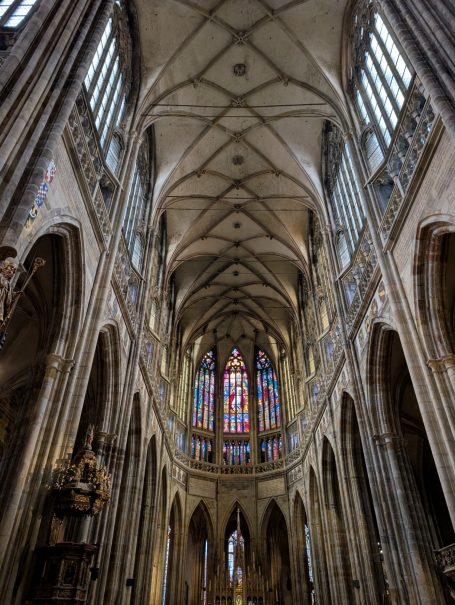
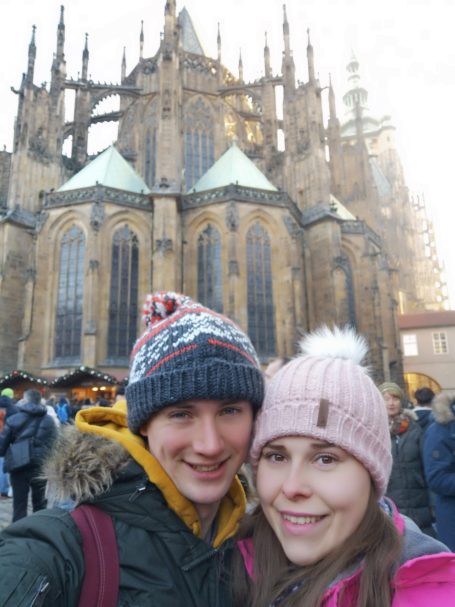
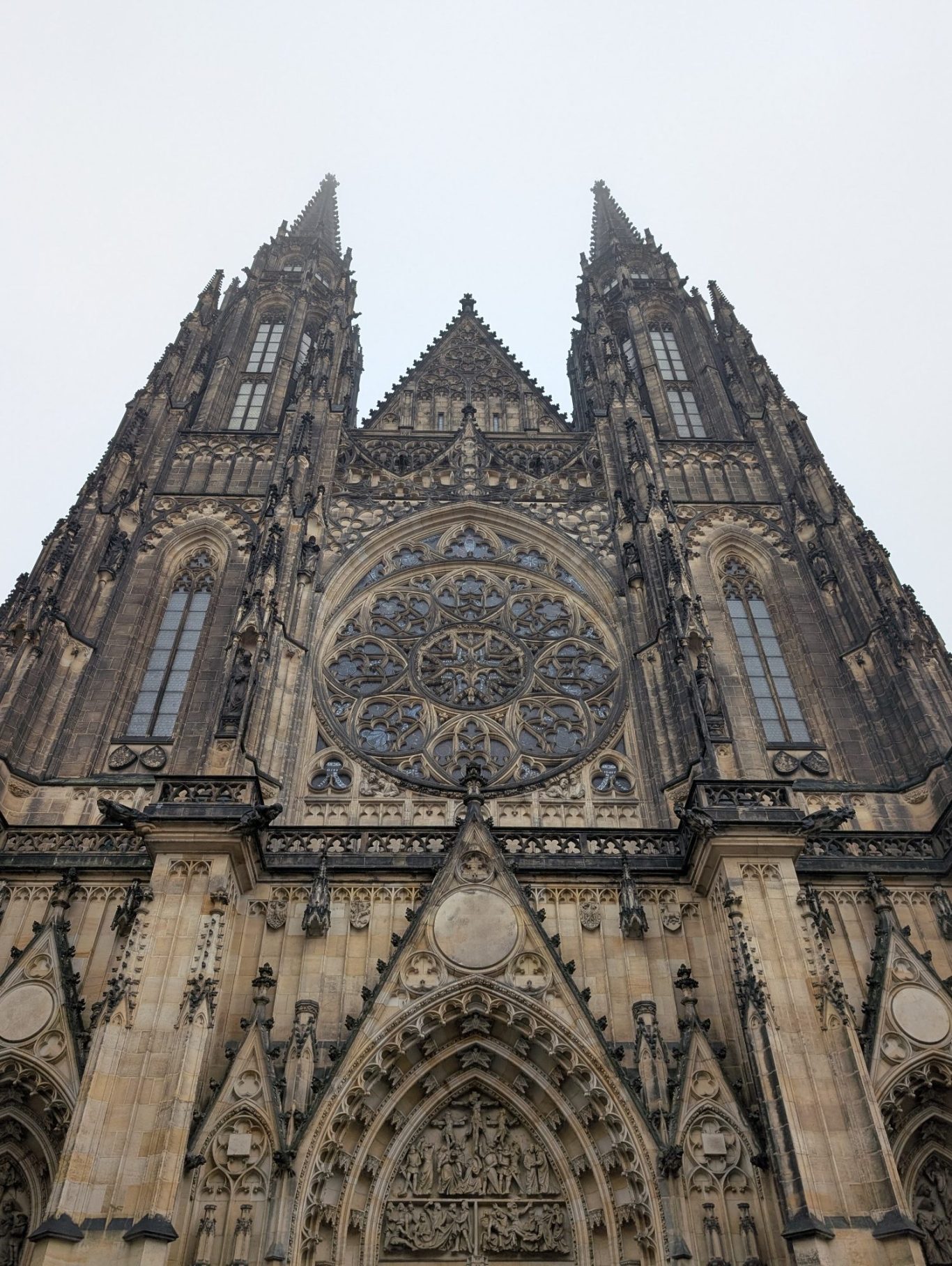
Dominating the city’s skyline, St. Vitus Cathedral is a masterpiece of Gothic architecture and the most important temple in the Czech Republic. Although construction began in 1344 under Charles IV, the cathedral was not officially completed until 1929, resulting in a fascinating blend of medieval Gothic and 20th-century Neo-Gothic styles.
As you enter, you are greeted by a breathtaking nave bathed in the colourful light of spectacular stained-glass windows—including a famous Art Nouveau piece by Alfons Mucha. The cathedral serves as the final resting place of Bohemian kings and holy saints, and it famously guards the Czech Crown Jewels, hidden behind a door with seven locks.
top visiting tips
- Beat the Crowds: Arrive as early as possible. The historical buildings open at 9:00 AM, but the castle grounds open at 6:00 AM. Getting through security early allows you to be first in line when the cathedral doors open. Alternatively, visit about an hour before the last entry (typically 3:40 PM in winter or 4:40 PM in summer) when the large tour groups have departed.
- The "Free" Section: If you are on a budget or short on time, you can enter the very front part of the cathedral for free. This allows you to admire the vast interior and many of the windows, though a ticket is required to walk around the altar and visit the royal tombs or the St. Wenceslas Chapel.
- Dress Respectfully: This is an active place of worship. Ensure your shoulders and knees are covered; visitors in "heavily soiled" or overly revealing clothing may be denied entry.
- Look for the Golden Gate: Before you leave, head to the outside of the south facade to see the Golden Gate. This was the original entrance for kings and features a stunning 14th-century mosaic of the Last Judgement.
- Photography Rules: You are welcome to take photos for personal use, but flash and tripods are strictly prohibited. If you're visiting for a religious service, photography is not allowed at all.
- Sunday Timing: Be aware that on Sundays, the cathedral is closed to tourists until 12:00 PM due to morning mass.
accessibility
The cathedral is equipped to handle visitors using wheelchairs or those with mobility impairments, though certain historic architectural features remain out of reach.
- Wheelchair-Accessible Entrances: The main entrance to the cathedral features ramps, allowing for step-free access into the nave.
- Interior Navigation: Most of the cathedral's main floor, including the stunning nave and many of the perimeter chapels, is accessible via steeper metal ramps designed to overcome original stone elevations.
- Accessible Restrooms: There is a barrier-free public restroom located conveniently near the cathedral within the castle grounds.
- Free Admission for Disability IDs: Visitors with a valid disability ID card (such as the ZTP or international equivalent) often receive free admission to the castle and its surrounding exhibits.
Due to the age and vertical nature of the structure, some areas are strictly inaccessible to those who cannot climb stairs.
- Great South Tower: This landmark is strictly not accessible for wheelchair users or those with limited mobility, as it requires climbing 287 narrow, winding steps.
- Historic Alleys: While the cathedral is accessible, some nearby areas like parts of the Old Royal Palace or certain towers have narrow passages and steep stairs that may be difficult to navigate.
ST George's Basilica
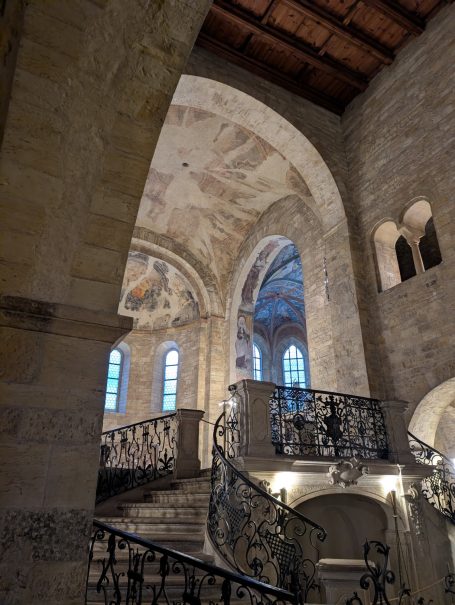
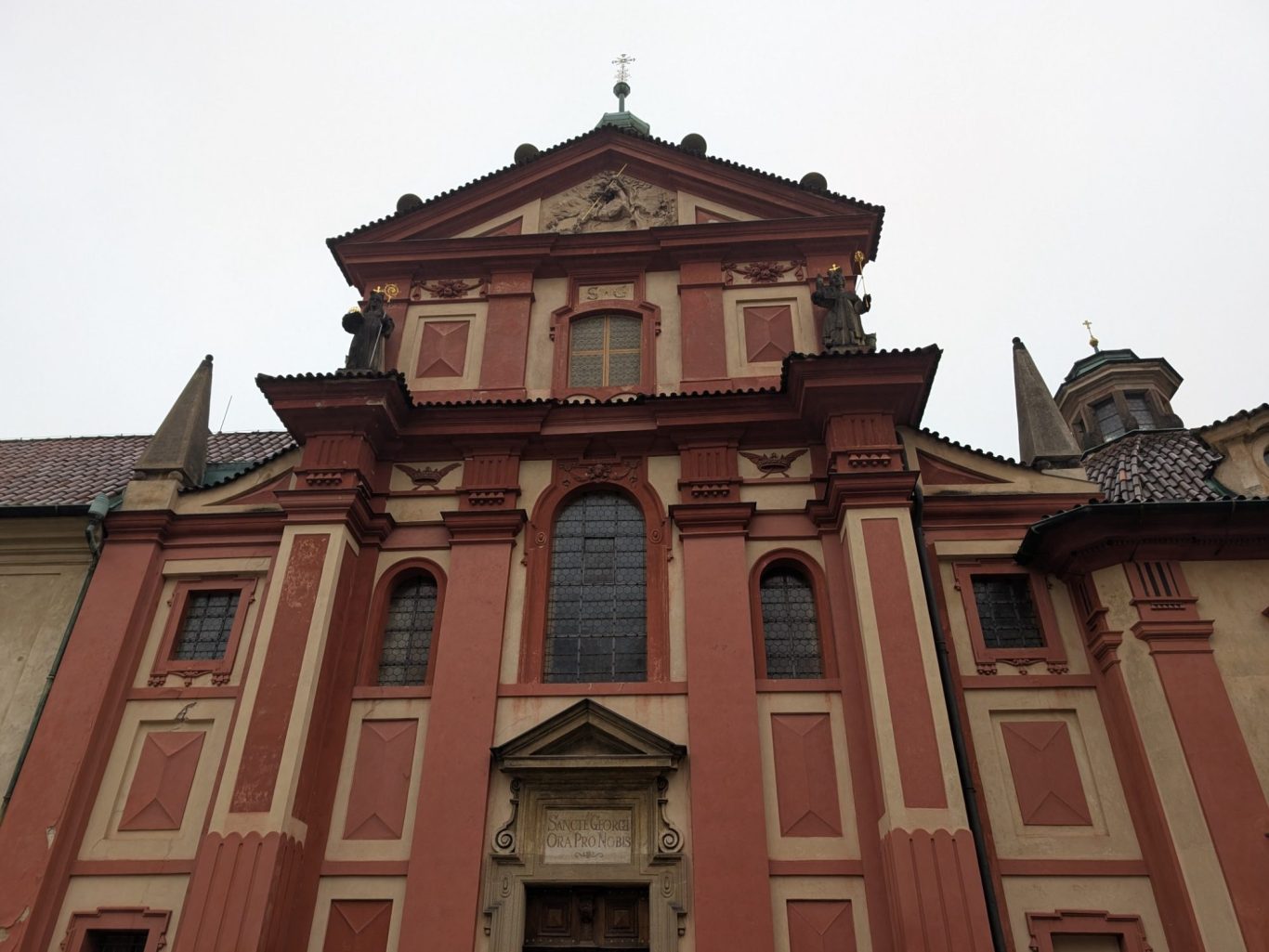
While the neighbouring St. Vitus Cathedral dazzles with Gothic grandeur, St. George’s Basilica (Bazilika Sv. Jiří) offers a journey back to the very origins of Prague Castle. Founded around 920 AD, it is the oldest surviving church building within the complex. Although its striking rusty-red facade is a 17th-century Baroque addition, the interior remains a beautifully austere example of Romanesque architecture, characterized by thick limestone walls, monumental twin towers, and an atmosphere of quiet, ancient mystery.
This basilica serves as the burial place of the Přemyslid dynasty, including St. Ludmila, the first Czech female saint and grandmother of King Wenceslas. Its exceptional acoustics also make it a premier venue for classical music concerts in the evenings.
top visiting tips
- Master the Transport System: Prague has one of the best public transit networks in Europe. For the Castle, take Tram 22—it winds up the hill, saving you a steep climb. Tip: Download the Lítačka app to buy tickets directly on your phone. Most trams also allow you to tap-to-pay with a contactless card inside the vehicle.
- The "Early Bird" Strategy: The Castle gates open at 6:00 AM, but the historic interiors (like the Basilica and Cathedral) don't open until 9:00 AM. Arriving at 8:15 AM allows you to pass through security and photograph the courtyards while they are empty before the ticketed areas open.
- Avoid "Tourist Trap" Food: Near the Castle and Old Town Square, you’ll see many "Trdelník" stands. While tasty, they aren't actually a traditional Czech historic dish. For an authentic meal, look for a "Hospoda" (pub) or a "Jídelna" (cafeteria) a few blocks away from the main tourist trail to find lower prices and better quality.
- Watch Out for Currency Exchanges: Avoid street money changers at all costs. Many exchange offices in the centre advertise "0% commission" but offer terrible rates. Tip: Use a bank ATM or look for the Honest Guide-approved exchange offices. Also, always choose to pay in "Local Currency" (CZK) rather than your home currency when using a card terminal.
- Wear Your Sturdiest Shoes: Prague is famous for its "cathead" cobblestones. They are beautiful but notoriously uneven and can be very slippery when wet. Leave the heels or thin sandals at home and opt for shoes with good grip and cushioning.
- Book Your Castle Tickets in Advance: While you can buy tickets on-site, the lines at the visitor centres can be long. You can purchase your Prague Castle Main Circuit tickets online to skip the ticket booth line (though you still must wait for the security check).
accessibility
Efforts have been made to open this 10th-century landmark to all guests, but some physical barriers remain.
- Partial Step-Free Access: Reviewers often note that the main nave of the basilica is accessible to wheelchair users, though there is a small step of approximately 10 cm (4 inches) at the entrance that may require assistance.
- Staff Assistance: Official castle guides and on-site staff are available to provide help and can direct you to the most suitable routes through the complex.
- Accessible Transport: The most convenient way to reach the site is via Tram 22 to the Pražský hrad stop, which avoids the steep uphill climbs associated with other entrances.
As one of the best-preserved Romanesque buildings in Prague, the preservation of its original architecture limits some modifications.
- Inaccessible Areas: The towers and some of the smaller side chapels are not wheelchair accessible due to narrow passages and historic stone stairs.
- Cobblestone Terrain: The square in front of the basilica and many surrounding paths are made of large, uneven cobblestones, which can be difficult for manual wheelchairs and those with balance issues.
golden lane (Zlatá ulička)
Tucked against the northern fortifications of the Prague Castle Click to open side panel for more information complex, Golden Lane is a picturesque row of miniature, brightly colored houses that look as though they were plucked from a fairy tale. Originally built in the 16th century to house castle guards, the street later became a hub for goldsmiths—giving the lane its name—and even inspired legends of alchemists attempting to turn iron into gold for Emperor Rudolf II.
Today, these charming dwellings have been meticulously restored to showcase the lives of their former inhabitants. As you wander down the narrow cobblestone path, you can peer into tiny rooms that once served as workshops, taverns, and homes, including the famous house No. 22 where author Franz Kafka once lived and worked.
top visiting tips
- Mind the Ticket Requirements: Unlike the general castle courtyards, Golden Lane requires a Prague Castle Main Circuit ticket for entry during standard visiting hours. Ensure you have your ticket ready to be scanned at the turnstiles.
- Arrive for the "After Hours" Magic: If you are on a budget or want to avoid the heaviest crowds, entry to the lane is typically free of charge after the museum interiors close (usually after 4:00 PM in winter or 5:00 PM in summer). While you won't be able to enter the tiny museums inside the houses, you can still walk the street and admire the architecture for free.
- Visit House No. 22 Early: This small blue house is the most popular spot on the lane because of its connection to Franz Kafka. It often gets cramped with tour groups, so prioritise visiting it as soon as the historical buildings open at 9:00 AM.
- Explore the Armoury Gallery: Don't forget to head upstairs to the defensive corridor that runs above the houses. It contains an extensive medieval armoury and textile gallery, featuring suits of armour, shields, and weapons from the 14th to 19th centuries.
- Wear Sensible Footwear: The cobblestones in Golden Lane are particularly old, small, and uneven. To avoid a twisted ankle, opt for comfortable walking shoes or sneakers rather than heels.
- Exit via the Daliborka Tower: The lane leads directly toward the Daliborka Tower, a former prison and dungeon. It's a great way to end your walk with a bit of dark medieval history before exiting the castle grounds toward the Malá Strana district.
accessibility
- Street Access: The lane itself is accessible to wheelchair users. While the ground is covered in historic cobblestones, they are generally smaller and more manageable than those in the main castle courtyards.
- Viewing from Outside: All the tiny houses feature glass barriers at their entrances. This means that even if you cannot physically enter a room, you can see the fully furnished historical interiors perfectly from the threshold.
- Accessible Restrooms: There is a barrier-free restroom located near the exit of Golden Lane, which is one of the more modern facilities in the castle complex.
- Portable Ramps: Some areas can be accessed with the help of portable ramps; you can ask the nearby castle staff for assistance if you encounter a specific obstacle.
- Tiny Interiors: Most of the houses have extremely narrow doorways and small interior spaces that cannot accommodate a wheelchair or large mobility aid. For example, House No. 22 (Kafka’s house) is particularly cramped.
- The Defensive Corridor: The fascinating armoury and textile exhibition located in the corridor above the houses is unfortunately not accessible, as it requires climbing a narrow, steep stone staircase.
- Daliborka Tower: The dungeon at the end of the lane is only accessible via steep stairs and is not suitable for those with limited mobility.
- Steep Exit: The path leading away from Golden Lane toward the Old Castle Stairs is quite steep. It is highly recommended that wheelchair users return back through the lane toward the flat courtyards rather than continuing to the eastern exit.
Lobkowicz Palace
Lobkowicz Palace Click to open side panel for more information stands as a unique cultural landmark within the Prague Castle Click to open side panel for more information complex, being the only privately owned building in the entire district. This 16th-century Baroque palace belongs to the noble Lobkowicz family and has survived multiple confiscations throughout history. Today, it serves as a world-class museum that provides an intimate look into European history through the lens of one of its most influential families.
top visiting tips
- Don't miss the daily concerts: The palace hosts acclaimed classical music concerts every day at 1:00 PM in its stunning 17th-century Baroque concert hall. Reviewers frequently highlight these performances as a serene highlight of their visit.
- Utilise the free audio guide: Admission includes a highly-rated audio guide narrated by members of the Lobkowicz family. Visitors often mention that this personal touch brings the history of the art and artefacts to life.
- View rare musical manuscripts: The museum houses an extraordinary collection of original scores, including hand-annotated manuscripts by Beethoven (Symphonies Nos. 4 and 5) and Mozart.
- Dine with a view: The palace cafe features a balcony that offers what many travellers consider some of the most spectacular panoramic views of Prague's red-tiled roofs and the Vltava River.
- See the Old Masters: The gallery contains world-renowned works, including Canaletto’s famous views of London and masterpieces by Bruegel the Elder.
accessibility
- Full Floor Access: The palace is equipped with an accessible elevator that provides entry to all public areas, including the museum galleries, the concert hall, and the restaurant.
- Wheelchair-Friendly Facilities: Reviewers and official guides confirm the presence of wheelchair-accessible restrooms and wide doorways (typically between 75 cm and 90 cm) throughout the building.
- Accessible Dining & Views: The Lobkowicz Palace Cafe Click to open side panel for more information and its famous panoramic terrace are fully accessible. Visitors with mobility issues can enjoy the spectacular views of Prague without having to navigate stairs.
- Concert Hall Seating: The 17th-century Baroque concert hall is wheelchair accessible. While seating is generally first-come, first-served, staff are known to be very helpful in accommodating guests with specific mobility needs.
- Personalised Assistance: Staff members are frequently praised for proactively offering the use of the elevator and assisting visitors with mobility aids.