
Cruise Port: Zeebrugge (Bruges), belgium
Zeebrugge may not have the instant, fairytale medieval charm of its famous neighbour, Bruges, but its raw, industrial character is precisely what makes it a fascinating destination. The port’s distinct identity is a direct result of its unique history: engineered entirely from scratch at the turn of the 20th century, it was designed specifically to give the landlocked city of Bruges a direct gateway to the North Sea. Today, this massive infrastructure marvel stands as one of Europe's most important mega-ports, celebrated for its jaw-dropping scale, its critical role in World War maritime history, and its unique status as a thriving naval base operating right alongside a charming, authentic Belgian seaside fishing community.
Journey Through the Pages
During Your Visit
Bruges Neighbourhoods
Know before you go
CRUISE PORT Information
Zeebrugge, a seaside port town in the Flanders region of northern Belgium, serves as a significant cruise port, often marketed as the "Gateway to Bruges," despite the historic city being located about 17 km (11 miles) inland. The cruise docks are primarily situated at the Leopold II Dam or the Albert II Dock within the busy commercial harbour, with larger vessels utilising the modern Zweedse Kaai (Swedish Quay) cruise facility. The Zeebrugge cruise terminal, notably the Cruise Terminal ABC (Afloat Backshore Connection) building, offers modern facilities such as tourist information desks, Wi-Fi, a panoramic lounge, and local souvenir shops.
Transport Options (PORT to Bruges)
- Train: Take the port’s free internal shuttle from your ship to the main exit gate. From there, walk 10–15 minutes along the main road to Zeebrugge-Dorp station for a direct 15-minute train to Bruges. It costs around £10pp return. This is the option we went for, and it couldn't have been easier. With a quick check on Google Maps, we found the station effortlessly, and the train journey itself was incredibly fast. Bruges station sits just on the outskirts of the city, leaving you with a lovely, short walk into the historic centre. If you're a confident traveller, this is definitely the option I'd recommend.
- Cruise Line Excursion/Transfer: Availability will depend on your specific cruise line, and while it is the most expensive route, it offers total peace of mind. Because it's an official excursion, the ship is guaranteed to wait for you if you run late. Plus, this option takes you entirely door-to-door, saving you the hassle of navigating local transport.
- Taxi/Private Transfer: Door-to-door from the terminal taxi rank straight into central Bruges (approx. 20–25 minutes). If split between a few people may be cost effective.
accessibility
pier access & terminal facilities
- Mandatory Port Shuttles: Because you cannot walk through the industrial port, free port shuttles run continuously between the ship's gangway and the cruise terminal. These shuttles are flat, low-floor, and fully wheelchair accessible to ensure a smooth transition.
- The ABC Cruise Terminal: The modern, multi-story ABC-Tower (Artes-Bruges-Cruise) handles passenger reception. The ground and first floors are fully accessible and ADA-compliant, making it very easy for travelers using manual wheelchairs or heavy mobility scooters to navigate. Elevators service the upper floors, which feature a panoramic visitor center and restaurant.
getting beyond the port
While the immediate terminal area is highly accessible, traveling from Zeebrugge to the nearby medieval city of Bruges (about 18 kilometres away) requires advance planning for mobility-challenged guests:
- Standard Cruise Buses: The standard independent "Cruise Express" coaches and shuttle buses that line up outside the terminal gates to take guests into Bruges are typically standard motorcoaches with steep entry steps and no wheelchair lifts.
- Accessible Excursions: Major cruise lines (such as Royal Caribbean, Celebrity, and Norwegian) offer dedicated "Accessible Independent Exploration" or "Accessible Medieval Bruges" shore excursions. These must be pre-booked well in advance and utilise specialised transport equipped with hydraulic lifts or ramps to accommodate full-time wheelchair and scooter users.
- Private Accessible Taxis: Public town buses and regional trains from Zeebrugge stations are not ideal for travelers with severe mobility limitations. If you are not booking a cruise line excursion, it is highly recommended to pre-book a private, specialised wheelchair-accessible vehicle (WAV) through a local Belgian tour operator to pick you up directly from the ABC Terminal.
DURING YOUR VISIT
ON THE DAY
- Start Early: Disembark promptly to make the most of your time.
- Language: While English is spoken in tourist areas, knowing a few basic French/Dutch phrases is always appreciated.
- Local Currency: Euros are used. Credit cards are widely accepted.
- Be Mindful of Your Belongings: As in any tourist area, be aware of pickpockets.
- Manage Your Time: Keep track of the time to ensure you return to your ship before departure.
food & drink
Bruges is a dream destination for food lovers. Because the city is located in the Flemish region of Belgium, the culinary scene beautifully blends hearty, comforting traditional dishes with world-famous street eats.
Traditional Flemish Sit-Down Dining
If you have time for a relaxed lunch or dinner, these traditional dishes are absolute must-tries. Make sure to step away from the tourist-heavy main square (The Markt) to find the best quality.
- Carbonnade Flamande (Stoverij): A rich, deeply savory beef stew. Unlike French beef bourguignon which uses red wine, this Belgian classic slow-simmers beef shoulder in dark Belgian beer, onions, thyme, and a hint of mustard-slathered gingerbread. It is melt-in-the-mouth comfort food, traditionally served with a mountain of crisp fries.
- Moules-Frites (Mussels and Fries): A massive pot of fresh North Sea mussels, typically steamed in white wine, celery, leeks, and butter. It's the quintessential Belgian meal.
- Vol-au-Vent: A beautifully flaky, puff pastry case overflowing with a creamy chicken and mushroom sauce, often flecked with tiny veal meatballs.
Iconic Street Food & Sweet Treats
- Authentic Frites: True Belgian fries are a serious craft. They are freshly cut from local Bintje potatoes, thick-cut, and double-fried in beef tallow (traditional) to make them incredibly crispy on the outside and fluffy on the inside.
- The Artisanal Waffle: As mentioned before, steer clear of the cold, heavily loaded tourist waffles. Look for a fresh Liège Waffle (dense, chewy, and caramelised) or a Brussels Waffle (rectangular, light, airy, and crispy).
- World-Class Chocolate: Bruges is packed with chocolatiers, but avoid the generic souvenir shops. Look for independent, master artisans. We visited Chocolatier Dumon just off the main Markt square. The shop is super cute, the staff were friendly and the chocolate was delicious!
Historic Beer Bars & Cafés
Belgium's beer culture is protected by UNESCO, and Bruges boasts some of the most atmospheric taverns in Europe.
- Brugs Beertje (Little Bruges Bear): A world-renowned, charmingly cramped beer matrix that has been open since 1983. They stock over 300 different Belgian beers. Tell the staff what flavors you like (fruity, sour, dark, blonde), and they will hand-pick the perfect pour for you, complete with its own matching, branded glassware.
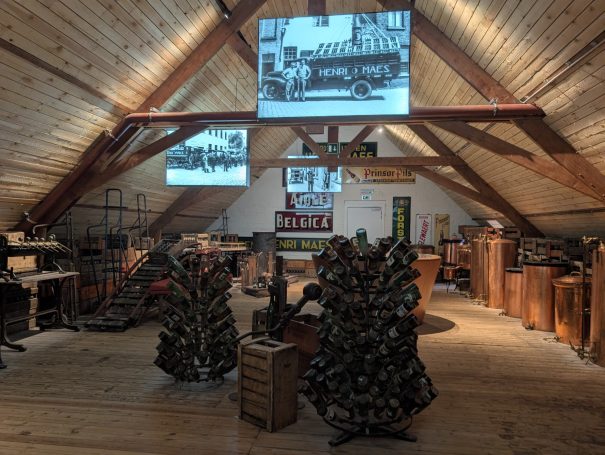
- De Halve Maan Brewery: Take a brewery tour to see the historic setup, or simply sit in the vibrant courtyard to enjoy a glass of Brugse Zot (the official beer of Bruges) or Straffe Hendrik (a potent, delicious tripel) unfiltered and straight from the source. Finding out this was the birthplace of Brugse Zot was a brilliant surprise. Our visit was a massive highlight—we pre-booked the brewery tour and tasting, and it was absolutely fabulous! One thing to note, though: the tour includes plenty of tight walkways and steep stairs, so it isn't ideal for those with limited mobility.
- 't Poortersloge: Located near the scenic canals, this quiet, characterful bar is an excellent spot to escape the midday tourist rush and sample rare local abbey and Trappist beers.
Bruges neighbourhoods
The markt & burg
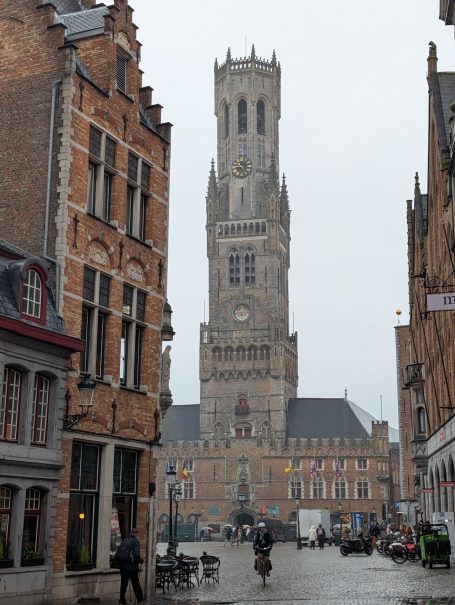
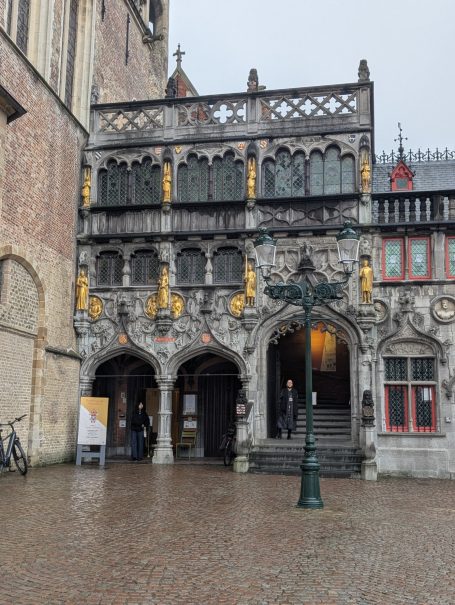
This is the Bruges you see on postcards. Centred around two magnificent squares—The Markt and the Burg—this area is an energetic hub of horse-drawn carriages, outdoor cafes, and towering historic monuments. While it gets incredibly busy with day-trippers, the sheer scale of the medieval architecture makes it an unmissable starting point.
The Markt & burg: key features
- The Belfry of Bruges: The iconic 83-metre bell tower dominant over the main square. Note: If you want to climb the 366 steps of the famous Belfry Tower for the ultimate view, you must book your timed-entry ticket online days in advance. They strictly limit capacity, and standby tickets sell out almost immediately in the morning.
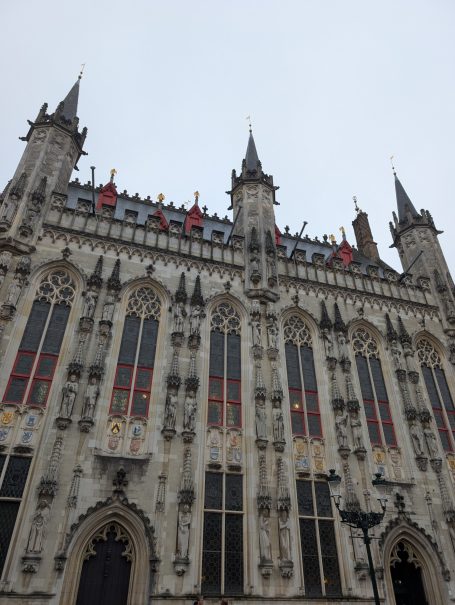
- The City Hall (Stadhuis): A stunning 14th-century Gothic building featuring a breathtaking, lavishly gilded Grand Hall.
- The Basilica of the Holy Blood: A double-decker chapel housing a revered vial of cloth stained with the blood of Christ.
Sint-Anna & The Hanseatic Quarter
Located just north of the busy centre, this area was the Wall Street of the medieval world, where international traders once gathered. Today, it transitions into a quiet, deeply authentic residential district. Sint-Anna is the perfect place to escape the cruise crowds, stroll along quiet residential canals, and see where local residents actually live.
SINT-ANNA & THE HANSETIC QUARTER: key features
- The Kruisvest Windmills: A beautiful green parkway on the city’s edge featuring four historic, wooden windmills overlooking the moat.
- Lace Centre (Kantcentrum): A museum showcasing the intricate, centuries-old art of traditional Flemish lace-making.
- Café Vlissinghe: The oldest active pub in Bruges (dating back to 1515), tucked away down a quiet Sint-Anna side street.
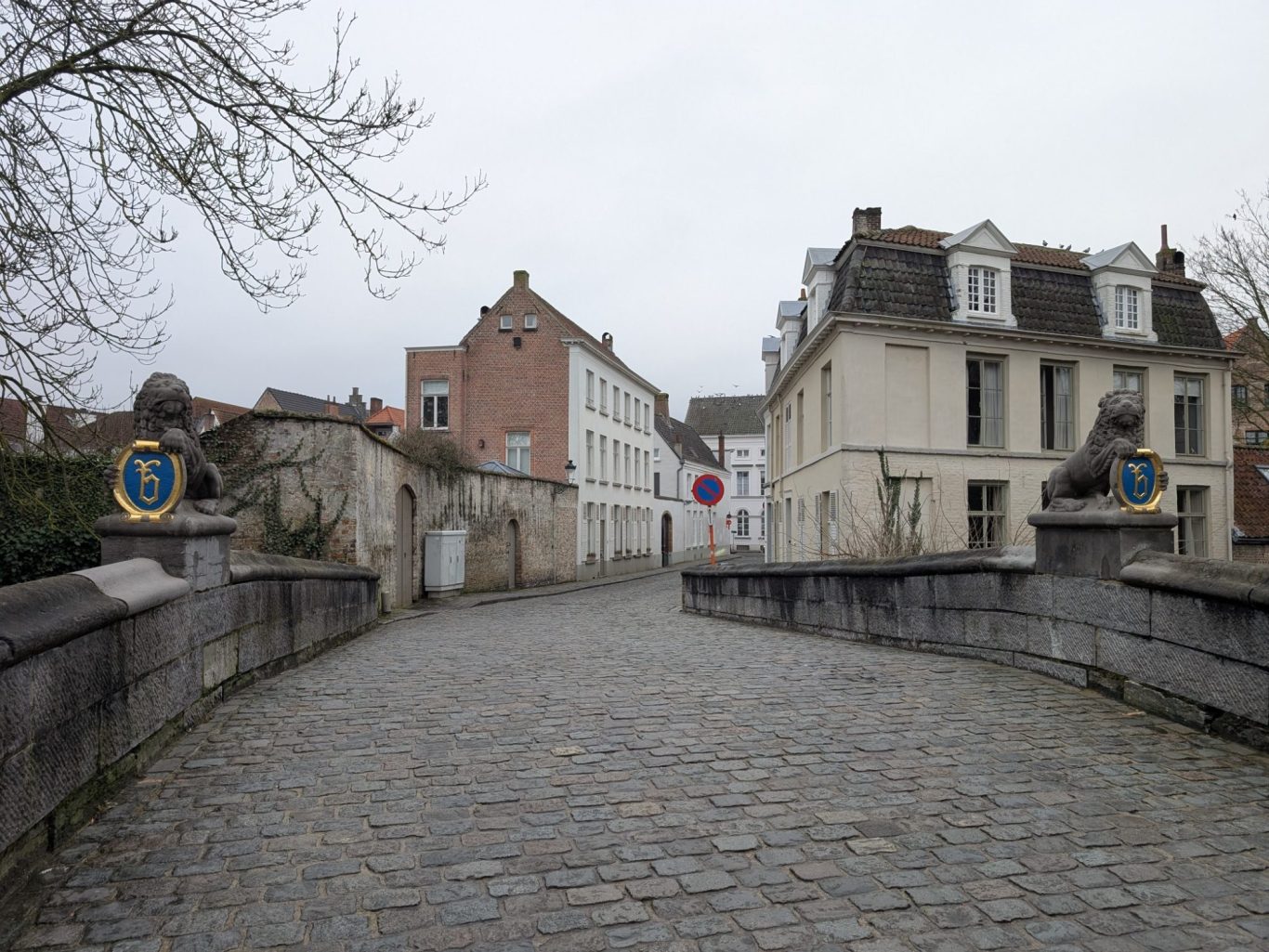
- Lion Bridge (Leeuwbrug): It spans the scenic Groenerei (Green Canal) along the Leeuwstraat, tucked just behind the Burg Square and the Stadhuis (City Hall). It is one of the most picturesque, classic stone bridges in the city, famously topped with four stone lions holding shields.
Sint-Gilles
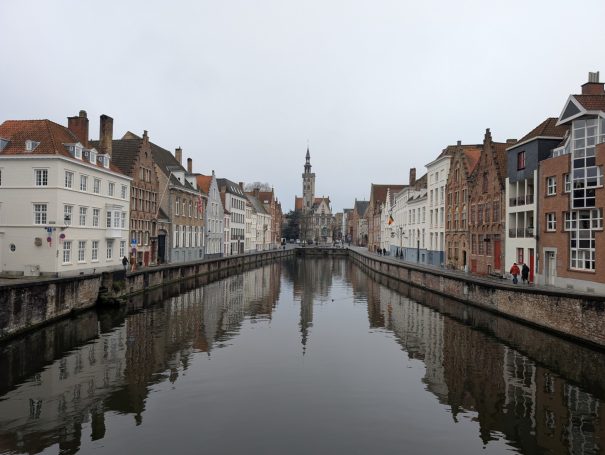
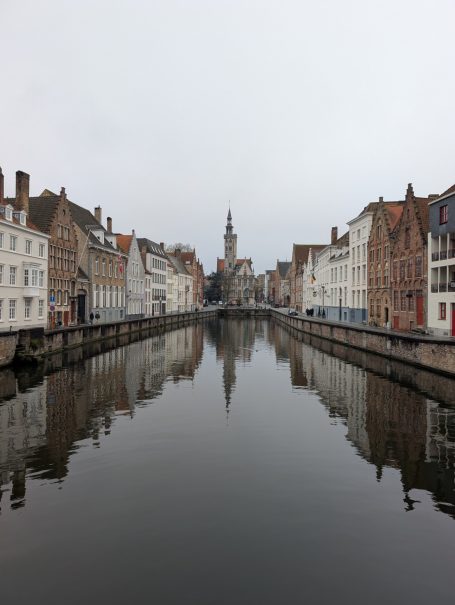
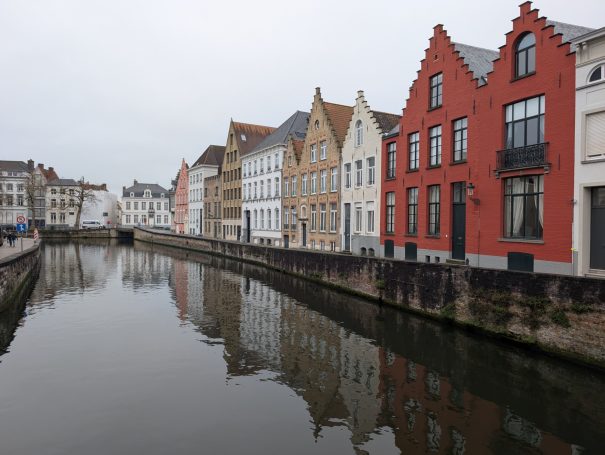
Tucked away in the northern reaches of the city center, Sint-Gilles is a sleepy, picturesque neighbourhood centered around the Spiegelrei (Mirror Canal). It is highly regarded by artists and photographers for its moody, mirror-like canal reflections and its beautifully preserved, uncrowded streets.
SINT-GILLES: key features
- Jan van Eyck Square: A quiet, scenic square dedicated to the famous Flemish Master painter, marking the old medieval port head.
- St Giles Church: A solemn, 13th-century brick church that serves as the quiet anchor of the neighbourhood.
- The Chocolate Line: Located on the border of this district, it is the shop of the city’s most famous, avant-garde chocolatier.
- King's Bridge (Koningsbrug): Standing on the King's Bridge gives you one of the most iconic, photographed views in all of Bruges. Looking down the Spiegelrei, you get a flawless look at the gorgeous, stepped-gables of the medieval merchant houses perfectly reflecting in the still water.
The Beguinage & Minnewater
Situated near the main train station, the southern edge of Bruges is a serene oasis of greenery and water. It serves as the primary entry point for independent travellers walking into the city. The area is steeped in romantic folklore and offers a remarkably calm, contemplative atmosphere compared to the bustling central squares.
tHE bEGUINAGE & MINNEWATER: key features
- The Princely Beguinage (Begijnhof): A UNESCO World Heritage site featuring a peaceful, white-walled courtyard where Benedictine nuns still live today.
- Minnewater (The Lake of Love): A stunning, willow-fringed lake complete with a tragic local legend and a scenic castle-like tower.
- The Swans of Bruges: The grassy banks here are the primary home to the city's famous, protected population of white swans.
Last Updated: 29 May '26